
Some links on this page may be affiliate links, which means I may earn a small commission at no additional cost to you.
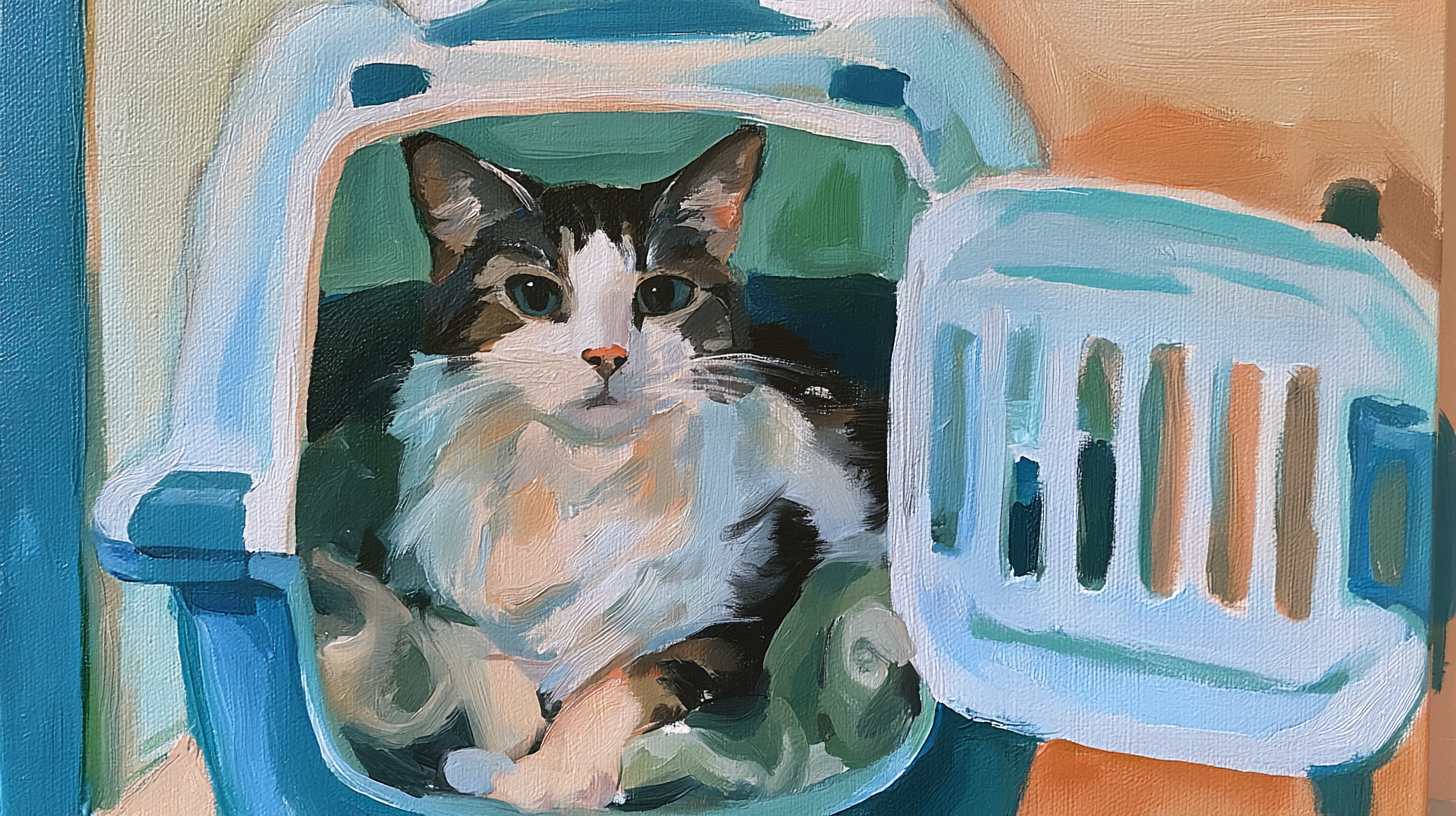
A familiar carrier can make veterinary travel less stressful for your cat.
The right carrier can make a surprisingly big difference in how stressful a trip feels for your cat. Whether you're heading to the veterinarian or traveling somewhere else, here are the things I recommend looking for.
Whenever possible, choose a carrier that allows your cat to be easily accessed from above, rather than requiring them to be pulled through a small front door.
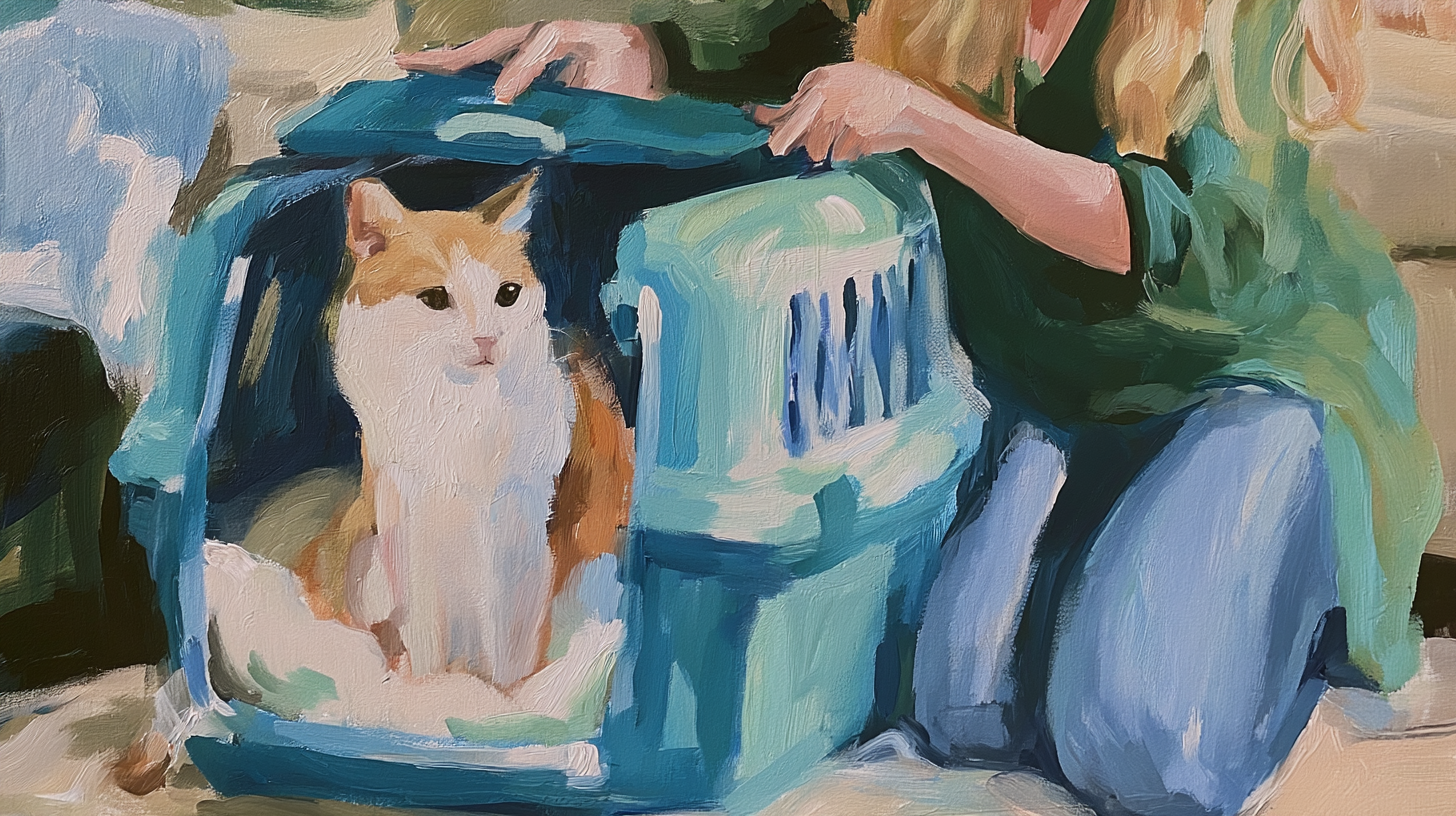
Top-opening and removable-top carriers make it easier to handle a nervous cat gently.
There are a few ways carriers accomplish this:
A top-opening carrier has a door or hatch on the roof so your cat can be gently lifted in and out.
A removable-top carrier allows the entire upper half to detach from the base. This is one of my favorite designs because a nervous cat may be able to remain comfortably in the bottom half of the carrier for at least part of their veterinary exam.
Some hard carriers don't technically have a top door, but can be quickly and easily disassembled. This can work well too.
The main goal is to avoid having to reach into a small front opening and pull out a frightened cat who is desperately trying to stay inside.
Hard-sided or soft-sided?
I personally love soft-sided carriers. They're lightweight, comfortable to carry, and usually easy to store.
But there's one important downside: some cats pee, poop, or vomit when they're stressed. If that happens in a fabric carrier, completely removing the smell can be difficult.
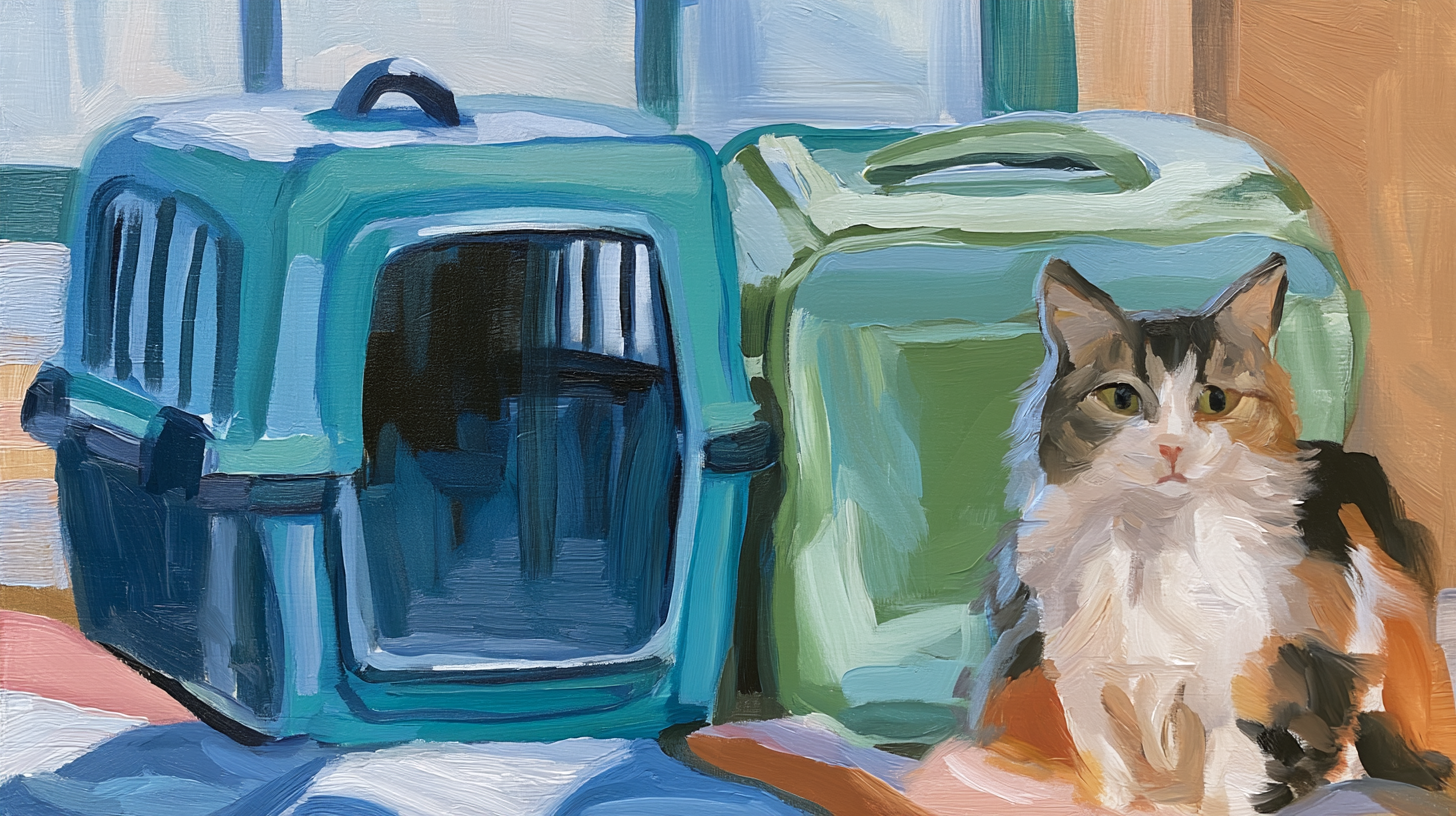
Hard-sided and soft-sided carriers each have advantages. The best choice depends on your cat.
For those cats, a hard plastic carrier with removable, washable bedding may be the better choice. You can simply take out the towel or blanket and thoroughly clean the carrier itself.
If your cat travels well and doesn't tend to have accidents, a soft-sided carrier can still be a great option.
There isn't one perfect carrier for every cat. The best carrier is the one that works for your kitty.
Don't carry it by the handle
Even if your carrier comes with a handle, I recommend supporting it from underneath with both arms and holding it close to your chest.
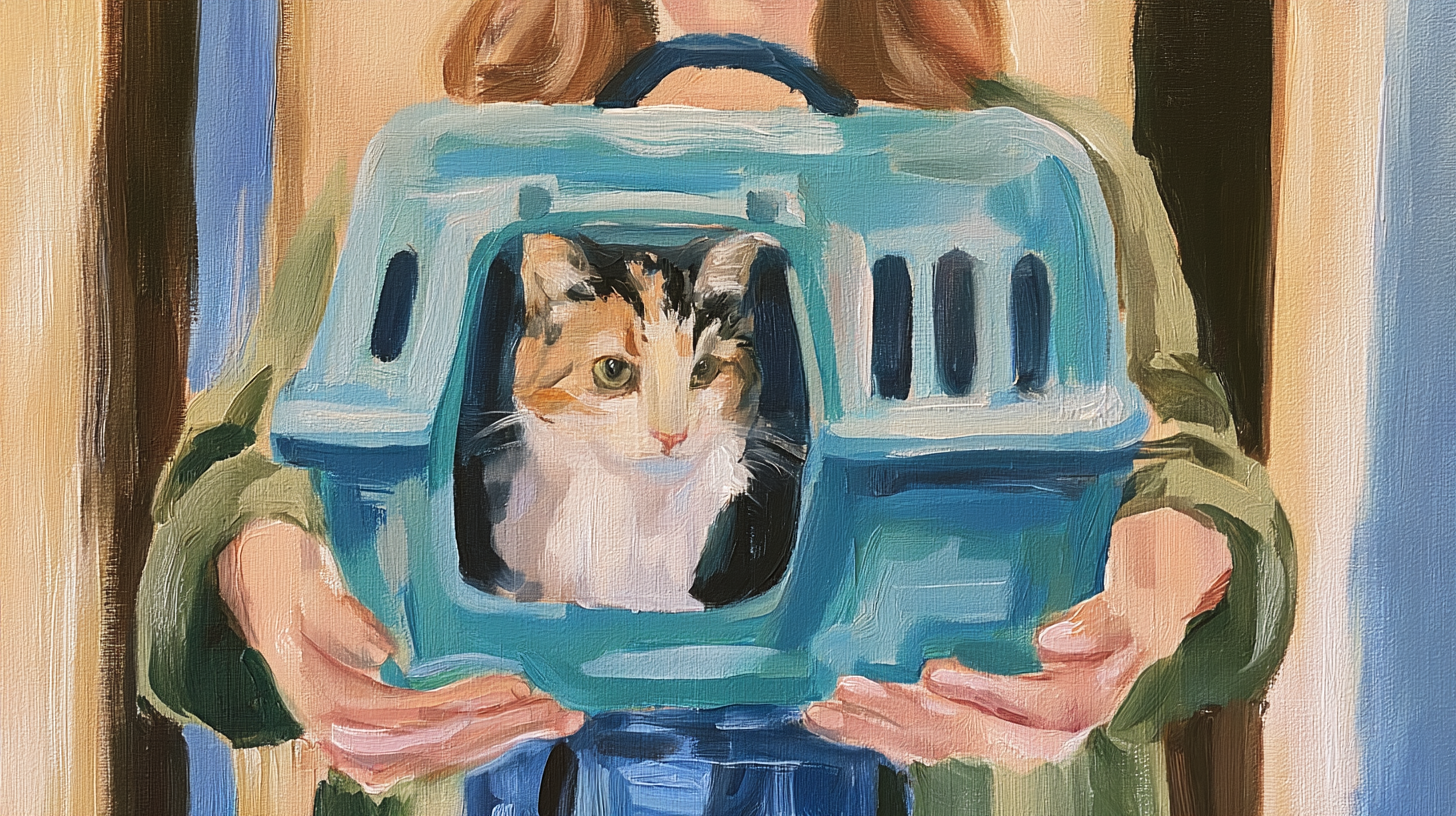
Instead of letting the carrier swing from the handle, support it securely from underneath with both arms.
Think about what it feels like inside when a carrier is hanging from a handle. With every step, your cat is swinging back and forth.
Supporting the carrier from underneath keeps it much steadier and also means you're not relying entirely on the handle or its attachment points to keep your cat safely contained.
Make the carrier feel cozy
Put familiar, comfortable bedding inside. A towel or small blanket that already smells like home can be reassuring.
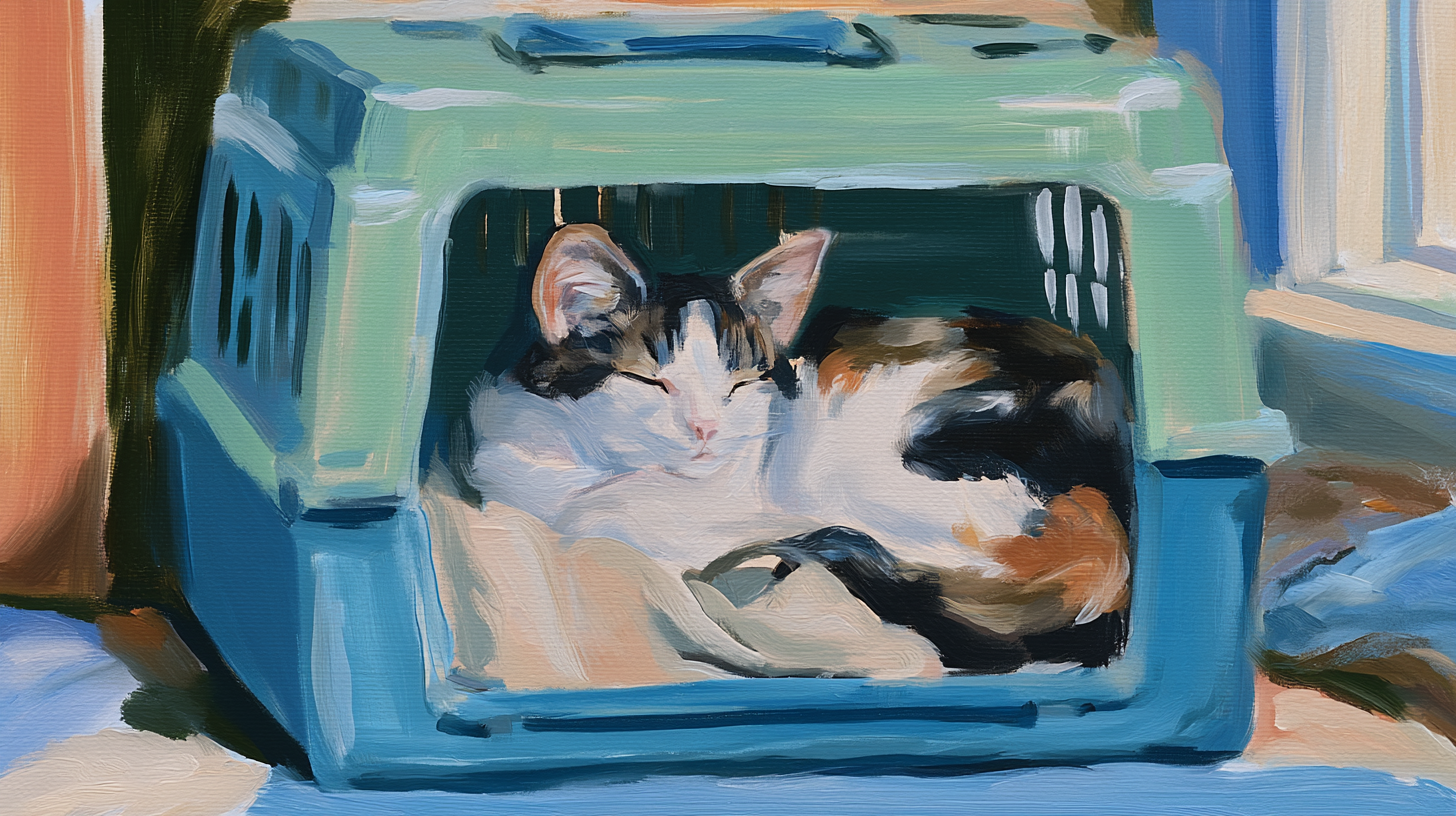
A familiar blanket can help the carrier feel more like home.
You can also cover the carrier with a lightweight towel during travel. For many cats, reducing all of the unfamiliar sights around them can help them feel more secure.
Another option is a feline pheromone spray such as Feliway. Spray it onto the towel or bedding ahead of time and allow it to dry before putting your cat inside. Catnip or favorite treats can also help create a positive association with the carrier.
Don't put the carrier away!
This may be my most important tip.
If the carrier comes out of the closet five minutes before every veterinary appointment, your cat quickly learns:
Carrier = something bad is about to happen.
And that's how you end up trying to coax a cat out from underneath the bed when you're already late for their appointment.
Instead, leave the carrier out at home.
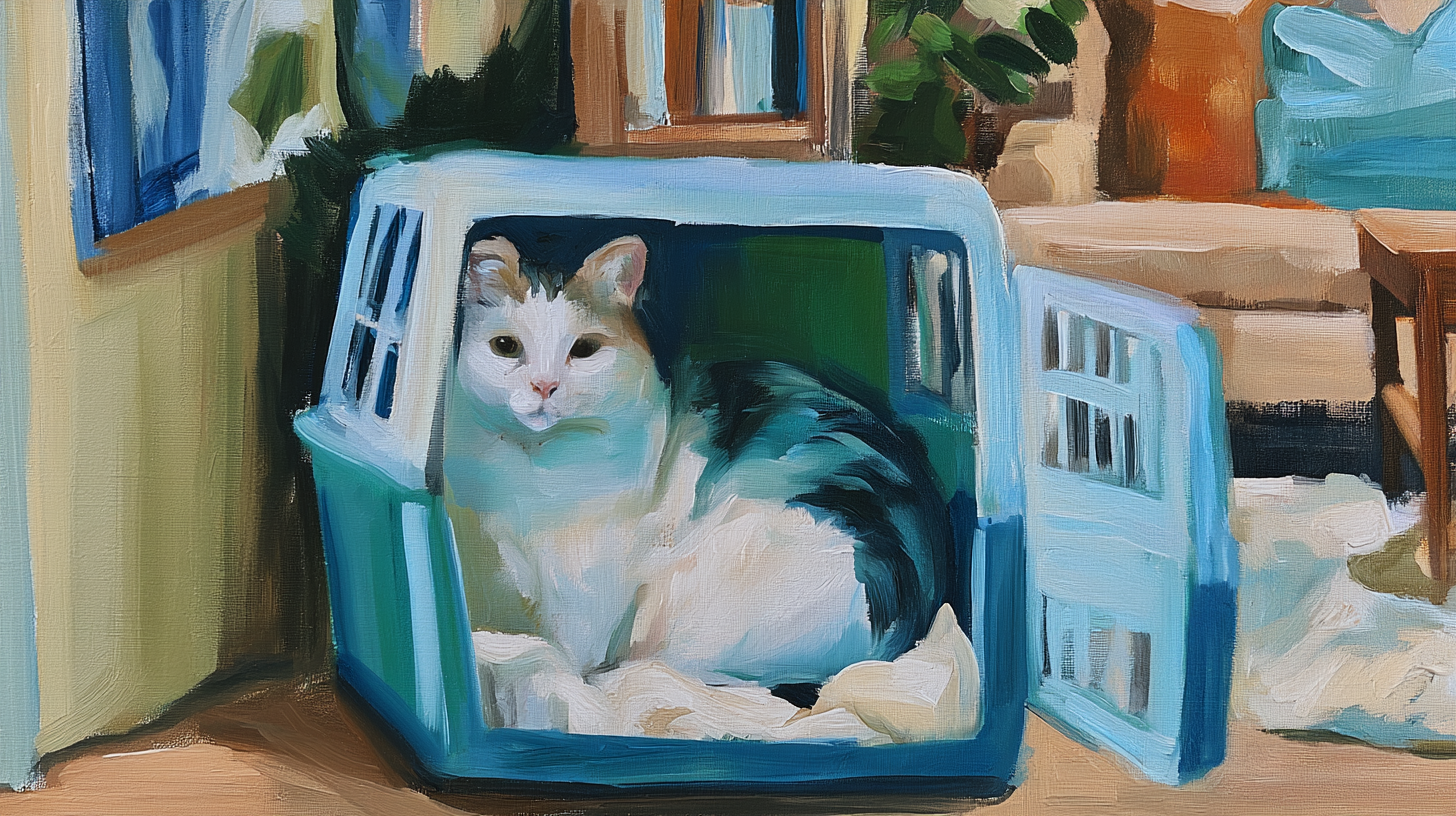
Leave the carrier out between visits so it becomes part of everyday life—not a warning that something scary is coming.
Make it part of the furniture. Leave the door open. Put comfortable bedding inside. Toss treats or catnip into it occasionally. You can even feed treats or meals nearby and gradually move them closer to or inside the carrier.
Let your cat explore it, sleep in it, walk through it, or completely ignore it.
The goal is for your cat to learn that sometimes they go into the carrier…and absolutely nothing happens.

Appointment in 20 minutes. Cat: “You will never find me.”
Still terrified of going to the vet?
Carrier training and low-stress handling can make a huge difference, but some cats still experience significant fear or anxiety around travel and veterinary visits.
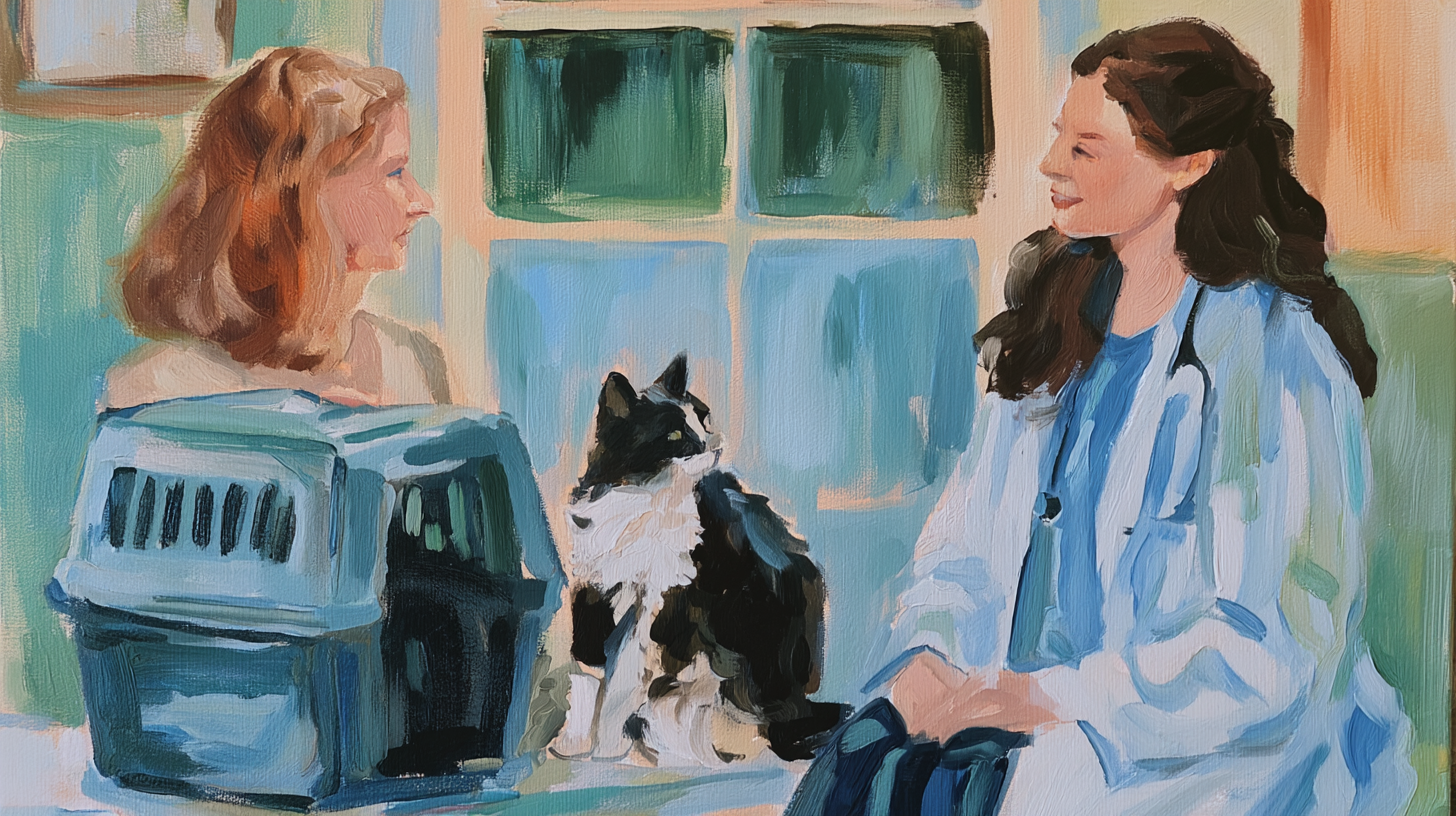
Some cats need additional support. Talk with your veterinarian if travel or veterinary visits cause significant fear or anxiety.
If that's your kitty, contact your veterinarian before the appointment and ask whether a pre-visit medication may be appropriate.
These medications can help reduce fear and anxiety before your cat ever leaves home, making the car ride, carrier handling, and veterinary visit easier for everyone, especially your cat.
My quick carrier checklist
✓ Easy access from above
✓ Top-opening, removable-top, or easily disassembled design
✓ Enough room to stand, turn around, and lie comfortably
✓ Secure and easy to clean
✓ Removable, washable bedding
✓ Supported from underneath when carried
✓ Covered with a towel during travel if your cat prefers it
✓ Left out at home between veterinary visits
✓ Ask your veterinarian about pre-visit medication if your cat is very stressed
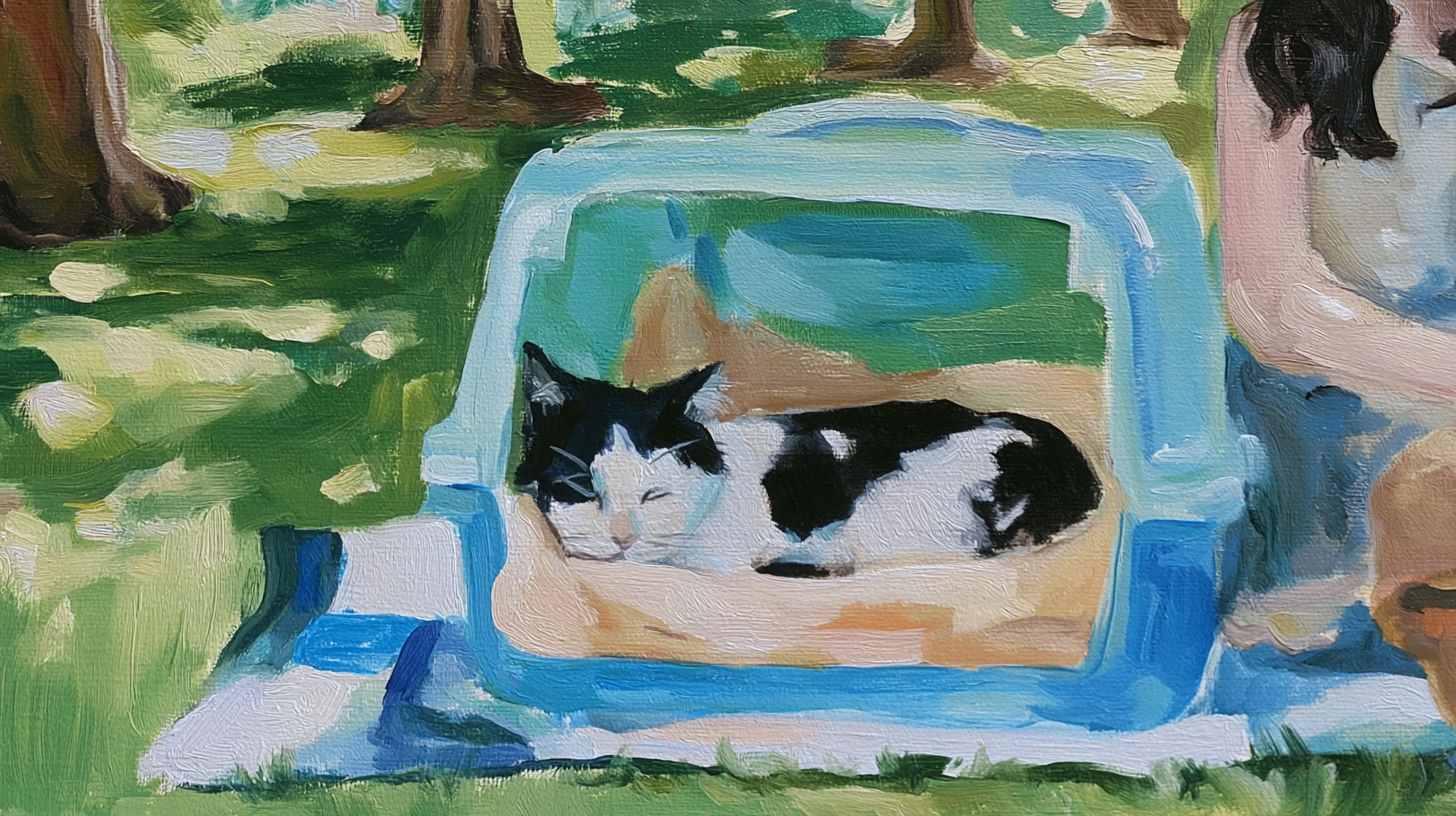
A carrier doesn't have to mean “we're going to the vet.” With the right preparation, it can become a familiar, comfortable place your cat feels safe.
A little preparation at home can make the entire experience easier, from getting your cat into their carrier to arriving at the veterinary hospital with a calmer kitty.
